How to Manage Pergola Maintenance Costs: A Practical Strategy
Maintaining outdoor shade structures requires balancing material preservation efforts against ongoing financial outlays over extended lifespans. Property owners often underestimate how weathering, UV radiation, and seasonal moisture cycles degrade exterior framing systems. How to Manage Pergola Maintenance Costs. Without a structured preservation plan, minor surface wear quickly expands into structural rot, hardware corrosion, or joint displacement.
Preserving exterior timber or metal framing demands an understanding of material physics, regional climate factors, and protective coatings. Overhead beams bear continuous structural loads while enduring intense rain, snow accumulation, and daily temperature swings. When protective surface barriers fail, water penetrates deep into timber grain, triggering biological decay and internal fiber expansion.
Understanding how sealants, structural hardware, and material choices interact enables homeowners to optimize preservation budgets effectively. Applying protective treatments on schedule prevents costly structural restoration work. Timely visual checks identify loose fasteners, surface mold, or sealant breakdown before permanent structural damage occurs.
This comprehensive reference guide establishes a practical framework for navigating surface treatments, structural hardware checks, material repairs, and seasonal maintenance schedules. Applying systematic maintenance principles allows property owners to preserve structural integrity while keeping ongoing upkeep expenses within predictable limits.
Understanding How to Manage Pergola Maintenance Costs
Managing long-term outdoor upkeep budgets requires evaluating protective material investments against cumulative repair expenses across decades. The exact phrase how to manage pergola maintenance costs describes a proactive preservation strategy focused on preventing structural decay before expensive repairs become necessary. Navigating this management process requires distinguishing between routine surface washing and complex structural restoration work.
A frequent misconception suggests that modern pressure-treated wood or composite materials eliminate ongoing maintenance demands entirely. Unprotected timber frames dry out, split, and warp under direct sun exposure, regardless of internal preservative treatments. Effective cost management relies on applying thin protective oil sealants regularly rather than letting wood fibers weather to failure.
Preventative Surface Sealing Cycles
Applying penetrating oil sealants every two to three years maintains timber moisture stability and blocks liquid water entry. Regular sealing prevents deep grain splitting and reduces the need for aggressive power washing or mechanical sanding.
Fastener and Hardware Inspections
Checking structural lag bolts, joist hangers, and column bases annually prevents joint displacement caused by seasonal timber movement. Retightening loose hardware maintains frame rigidity and stops moisture accumulation around fastener penetration points.
Drainage and Debris Clearing
Clearing organic leaves, pine needles, and dirt from rafter intersections stops moisture traps from forming on horizontal beam ledges. Removing damp organic debris prevents surface fungal growth and extends protective coating lifespans.
Targeted Component Replacements
Replacing individual damaged shade slats or cracked rafter caps early prevents rot from spreading to primary load-bearing beams. Prompt localized repairs keep maintenance scopes small and prevent full structural overhauls.
Historical Evolution of Outdoor Structure Upkeep
Exterior timber maintenance methods have shifted significantly alongside advances in wood chemistry, hardware coatings, and synthetic materials over the past century. Traditionally, builders relied on thick coal-tar creosote or lead-based paints to protect outdoor wood structures from fungal decay. While highly effective at blocking moisture, these early coatings were toxic, opaque, and required labor-intensive scraping during recoating cycles.
The mid-twentieth century introduced chemical pressure impregnation, using copper-based preservatives to protect softwoods from ground-contact rot. However, early pressure-treated lumber tended to cup, warp, and split as internal processing moisture evaporated under sunlight. Homeowners had to apply thick exterior varnishes or alkyd stains that formed hard surface films. Unfortunately, these rigid film finishes cracked under thermal expansion, trapping rainwater beneath the surface and accelerating internal rot.
Modern preservation methods emphasize micro-porous penetrating oil finishes and water-borne alkyd formulations. Penetrating finishes soak deep into wood grain without forming a brittle surface film, allowing moisture vapor to escape naturally. Additionally, modern powder-coated aluminum and synthetic composite profiles offer alternative low-maintenance options, though they still require periodic washing to clear atmospheric pollution and biological spores.
Conceptual Frameworks for Maintenance Planning
Developing an efficient upkeep strategy requires applying established structural and material engineering principles. Reactive maintenance leads to unexpected budget spikes, whereas planned preventative maintenance stabilizes ongoing operating expenses.
Deterioration Curve Management
All exterior building materials experience predictable physical degradation when exposed to sunlight, rain, and temperature shifts. Applying protective sealants at early degradation stages restores surface protection at minimal expense. Delaying maintenance until wood fibers grey and split increases restoration labor by requiring deep sanding and wood brighteners.
Moisture Threshold Containment
Fungal rot spores require timber moisture levels above twenty percent to colonize wood fibers. Keeping wood grain below this moisture threshold stops fungal decay completely. Maintaining sound surface coatings and adequate ground clearance prevents moisture absorption across wet seasons.
Thermal Expansion and Fastener Tensioning
Metal and timber components expand and contract at different rates during seasonal temperature cycles. This differential movement gradually loosens threaded lag screws and post base anchors. Annual fastener audits restore structural tightness before joint movement damages internal bolt threads.
Material Categories and Financial Maintenance Profiles
Material selection establishes the baseline maintenance frequency, specialized cleaning products, and long-term operating costs across a structure’s lifecycle.
| Material Type | Annual Upkeep Effort | Required Coating Type | Expected Lifespan |
| Pressure-Treated Pine | High | Penetrating Oil Stain | 15 – 20 Years |
| Western Red Cedar | Moderate | UV-Blocking Oil Finish | 20 – 25 Years |
| Extruded Aluminum | Low | Mild Soap Washing | 30+ Years |
| Wood Composite | Low | Mold-Inhibiting Wash | 25+ Years |
Pressure-Treated Southern Yellow Pine
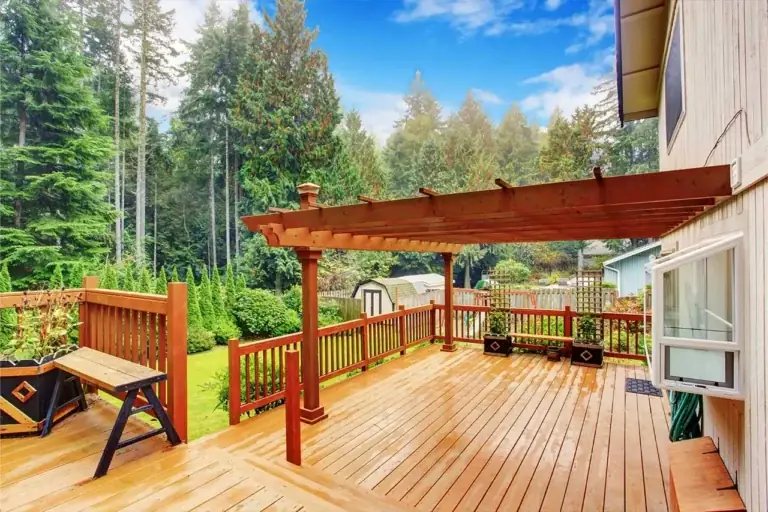
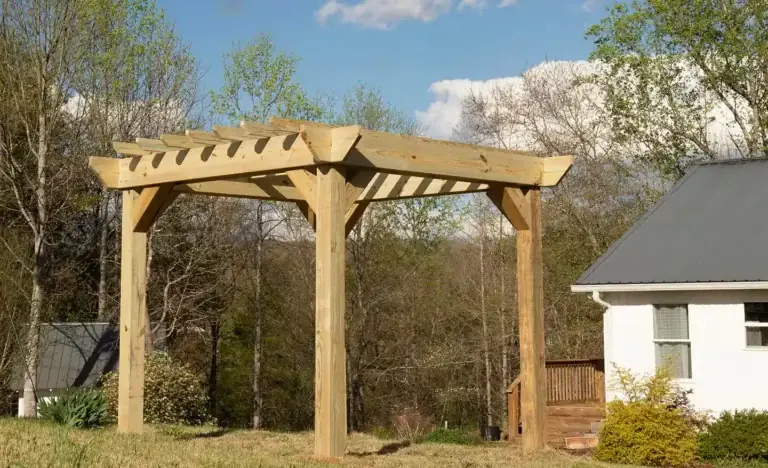
Pressure-treated pine offers low initial installation costs but demands consistent maintenance attention. Chemical treatments protect internal wood fibers from decay, but the soft grain remains vulnerable to surface checking and warping. Applying penetrating oil stains every two years maintains surface appearance and controls dimensional movement.
Western Red Cedar
Western red cedar contains natural tannic acids that resist rot and insect attack without synthetic chemicals. Cedar exhibits excellent dimensional stability, shrinking and swelling minimally during weather changes. Applying a light UV-blocking oil every three years preserves its natural cedar tone while preventing grey surface weathering.
Extruded Powder-Coated Aluminum
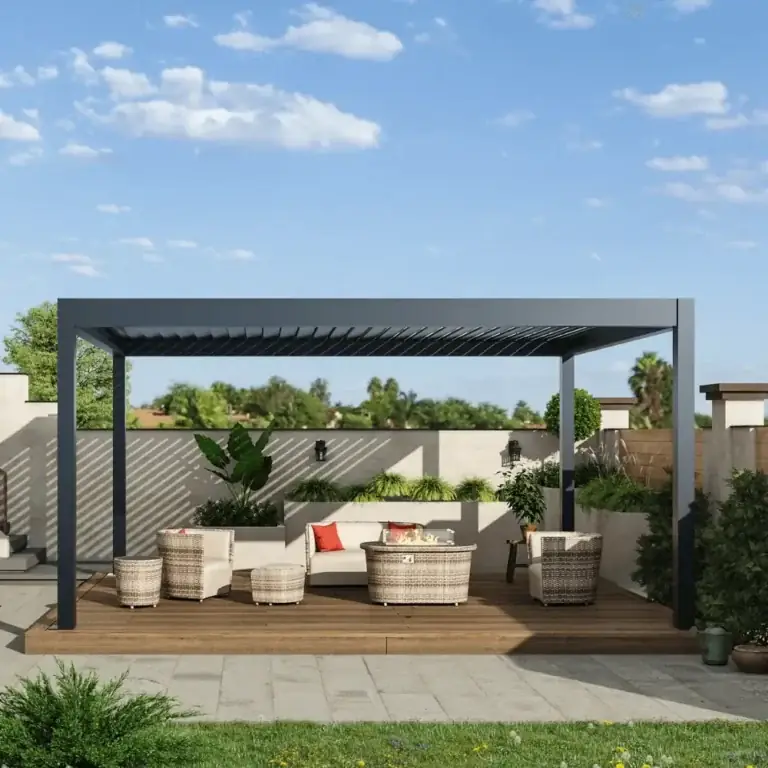
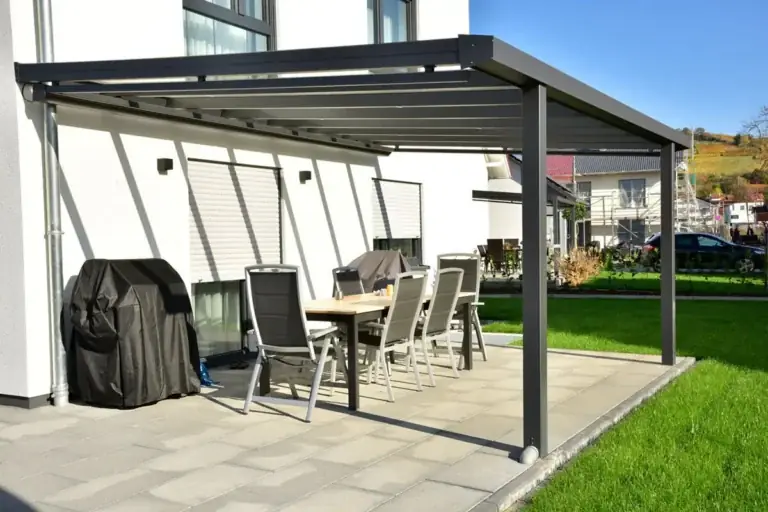
Aluminum frameworks eliminate wood rot, fungal decay, and structural splitting risks entirely. Maintenance involves washing factory powder coatings annually with mild soap to remove airborne dust and pollen. Checking factory joint seals and motorized louver mechanisms preserves smooth mechanical operation.
Wood-Plastic Composites
Composite profiles combine recycled wood fibers with synthetic polymers to form rot-resistant shade members. Composites do not require liquid staining, painting, or sanding over their service life. However, textured composite surfaces can trap organic mold spores in shaded areas, requiring annual biocide washing.
Detailed Real-World Maintenance Scenarios How to Manage Pergola Maintenance Costs
Reviewing practical maintenance scenarios illustrates how proactive care strategies minimize long-term expenses across different outdoor environments.
Scenario A: Neglected Cedar Frame Restoration
A homeowner inherits a five-year-old cedar framework that has turned grey and developed surface mildew from lack of sealing. Restoration requires applying a wood cleaner, scrubbing severe mold patches, and applying a oxalic acid brightener to restore wood tone. After drying, two coats of penetrating oil stain are applied, bringing total restoration expenses well above routine maintenance costs.
Scenario B: Coastal Aluminum System Upkeep
A coastal aluminum frame experiences salt spray accumulation on hardware connections and motorized louver tracks. The owner establishes a quarterly fresh-water rinse schedule to flush salt deposits from metal joints. Applying silicone lubricant to stainless steel pivot pins prevents corrosion binding and preserves motor lifespans.
Scenario C: Moisture Damage at Post Bases
Standing surface water on a concrete patio saturates the lower six inches of pressure-treated wood columns. Water wicks upward through end-grain fibers, causing early bottom rot around mounting bracket holes. The owner installs raised metal post bases to lift wood ends above standing water, stopping moisture absorption and saving the posts.
Scenario D: High-Sun Pine Frame Preservation
A pressure-treated pine framework located in an intense sun zone experiences rapid surface drying and micro-checking along horizontal rafters. The owner establishes an eighteen-month maintenance cycle, applying semi-transparent oil stains featuring trans-oxide pigments to block solar UV radiation. Learning how to manage pergola maintenance costs in high-sun regions relies on using UV-resistant pigments to protect wood fibers.
Planning, Financial Dynamics, and Lifecycle Costs
Managing maintenance budgets effectively requires allocating funds for routine supplies, professional labor, tool rentals, and structural contingency repairs.
| Expense Item | Average Cost Range ($) | Primary Cost Factors |
| Penetrating Oil Stain | 45 – 80 per Gallon | Resin Quality and UV Pigments |
| Specialized Wood Cleaners | 20 – 40 per Container | Concentration and Active Ingredients |
| Professional Pressure Washing | 150 – 350 per Job | Structure Size and Height Accessibility |
| Replacement Structural Hardware | 15 – 45 per Fitting | Stainless Steel vs. Galvanized Ratings |
| Annual Maintenance Reserve | 100 – 250 per Year | Material Type and Regional Climate |
Direct Maintenance Expenses
Direct costs include purchasing penetrating stains, wood cleaners, application brushes, and drop cloths. Buying high-grade oil sealants increases upfront supply costs slightly but extends intervals between recoating cycles, lowering long-term material expenses.
Labor Trade-Offs
Performing maintenance tasks personally reduces cash outlays to basic material costs. However, large elevated frameworks or complex motorized louver systems may require professional painters or equipment rentals, increasing short-term maintenance spending.
Maintenance Tools, Sealants, and Preservation Systems
Selecting proper application tools and protective coatings accelerates preservation work while ensuring uniform chemical absorption into wood grain.
Penetrating Oil Stains vs. Film Coatings
Penetrating oil formulations soak directly into wood pores, displacing internal moisture and coating cellulose fibers. Unlike film-forming paints, penetrating oils wear away gradually without peeling, making future recoating simple without heavy sanding.
Low-Pressure Chemical Washers
Using low-pressure chemical sprayers to apply wood cleaners avoids damaging soft wood grain with high-pressure water streams. High-pressure washing can gouge timber fibers, raising wood grain and creating rough surface textures that trap moisture.
Stainless Steel Fastener Upgrades
Replacing rusted carbon steel screws with high-grade stainless steel hardware prevents dark tannic staining around bolt holes. Stainless steel fasteners resist atmospheric corrosion, maintaining structural joint strength indefinitely.
Risk Landscape and Structural Failure Patterns How to Manage Pergola Maintenance Costs
Neglecting routine maintenance triggers compounding structural failures that threaten structural safety and lower property values.
Fungal Decay and Internal Timber Rot
When water penetrates unsealed wood grain, fungal spores germinate and consume structural lignin. Internal rot weakens timber load capacity without displaying obvious surface damage, leading to sudden beam sagging or joint failure under snow loads.
Metal Connector Galvanic Corrosion
Using incompatible metal fasteners on copper-treated wood causes rapid galvanic corrosion. Uncoated steel bolts deteriorate quickly inside wet pressure-treated timber, weakening critical beam-to-column connections.
Unmanaged Racking and Joint Movement
Loose structural bolts allow framework movement during gusting winds. Continuous sway enlarges bolt holes in soft wood, causing structural instability that requires custom steel bracing plates to stabilize.
Governance, Seasonal Routines, and Structural Preservation
Establishing a structured maintenance calendar ensures that seasonal care tasks are performed on schedule, preventing minor surface issues from escalating into major structural repairs.
Spring Inspection and Washing Protocol
Spring maintenance focuses on removing winter dirt accumulation, inspecting post bases for frost movement, and washing mold spores from horizontal surfaces using specialized wood cleaners.
Autumn Sealing and Hardware Tightening
Autumn prep involves checking structural lag screws, clearing fallen leaf debris from rafter joints, and applying penetrating oil sealants before winter rain and snow arrive.
Tracking Metrics and Maintenance Performance Indicators
Monitoring physical timber condition signals enables property owners to evaluate protective coating performance and schedule reapplication precisely.
Water Droplet Bead Testing
Sprinkling clean water onto horizontal wood surfaces provides an instant check of sealant integrity. If water beads tightly into round droplets, the protective oil barrier remains intact. If water soaks quickly into the grain, darkening the wood, fresh sealant must be applied.
Fastener Torque Audits
Using a standard wrench to check lag bolt tightness identifies loose hardware before joint movement occurs. Maintaining proper fastener tension preserves frame stiffness across changing seasons.
Common Maintenance Misconceptions
Addressing common maintenance myths prevents property owners from applying incorrect preservation techniques that damage outdoor framing.
Misconception 1: Pressure-Treated Wood Needs No Sealant
Correction: Chemical pressure treatments protect wood against internal fungal rot and insect damage, but they do not block moisture absorption. Unsealed pressure-treated wood warps, splits, and checks rapidly when exposed to direct sun and rain.
Misconception 2: High-Pressure Washing Is Best for Cleaning
Correction: Excessive water pressure tears delicate wood fibers apart, raising the grain and causing rough, fuzzy surface textures. Low-pressure chemical cleaners remove dirt and mold safely without damaging timber surfaces.
Misconception 3: Paint Provides Better Protection Than Oil
Correction: Exterior paint creates a rigid surface film that cracks as timber expands and contracts with humidity changes. Rain seeps into these hairline cracks, trapping moisture beneath the paint layer and accelerating internal wood decay.
Misconception 4: Composite Materials Are Zero Maintenance
Correction: While composite boards do not require staining or sanding, their textured surfaces trap organic dust and mold spores. Annual washing with mild biocidal cleaners is required to prevent surface mold stains in damp environments.
Ethical and Community Maintenance Factors
Maintaining outdoor structures supports neighborhood visual standards and prevents safety hazards on residential properties.
Property Aesthetics and Community Values
Keeping outdoor frameworks clean, square, and properly stained preserves neighborhood architectural harmony. Well-maintained landscape structures support surrounding property values across residential communities.
Structural Safety Stewardship
Ensuring that overhead framing remains structurally sound protects family members and guests from collapse risks during high winds or snowstorms. Responsible structural maintenance fulfills a core duty of home ownership.
Strategic Synthesis and Final Recommendations
Managing long-term maintenance costs for an outdoor shade framework requires proactive planning, correct material choices, and consistent preservation routines. Homeowners control operating budgets by applying penetrating oil sealants on schedule rather than performing expensive structural repairs after rot occurs.
Systematic care—including annual hardware tightening, low-pressure surface cleaning, and water bead testing—protects structural investments while maintaining attractive outdoor living spaces. Learning how to manage pergola maintenance costs transforms routine home upkeep into a manageable, predictable process that extends structural lifespans for decades.