How to Avoid Cheap Pergola Material Risks: Structural Safety and Material Selection Guide
Constructing an outdoor shelter requires selecting materials capable of withstanding constant environmental exposure while maintaining structural integrity. Low-cost building components often seem attractive during initial budget planning, but inferior materials frequently degrade prematurely when subjected to wind, moisture, and temperature fluctuations. How to Avoid Cheap Pergola Material Risks. Understanding how to avoid cheap pergola material risks allows property owners to make informed structural decisions that prevent sudden failures, unexpected repairs, and safety hazards over the lifespan of an outdoor installation.
Selecting materials purely based on upfront purchase price often masks hidden long-term expenses. Substandard lumber, thin-gauge hollow metals, and low-grade fasteners struggle to support environmental loads like heavy snowfall, high winds, and continuous solar radiation. When these budget materials begin to bend, rust, or rot, structural stability decreases, threatening nearby property and making the living space unusable.
Protecting an outdoor build requires evaluating structural performance factors, material density ratings, protective surface finishes, and hardware corrosion resistance thoroughly. Assessing physical properties early helps builders identify hidden flaws before components are installed on-site. Combining proper material selection with accurate load calculations creates durable outdoor structures that withstand changing weather patterns safely for decades.
This comprehensive guide examines technical material criteria, failure mechanisms, financial trade-offs, and practical inspection methods for outdoor building components. Reviewing structural science, environmental stressors, and manufacturing standards enables property owners to choose durable materials that deliver long-term reliability and peace of mind.
Understanding How to Avoid Cheap Pergola Material Risks
Defining the Scope of Material Risks
Evaluating outdoor building components requires understanding how lower-grade materials behave under continuous physical stress. Learning how to avoid cheap pergola material risks involves identifying weak structural elements before installation, rather than reacting after components fail on-site. Low-cost alternatives often hide thin walls, porous wood structures, and untreated surface finishes behind attractive coatings that deteriorate rapidly when exposed to rain, snow, and direct sunlight.
Misleading Specifications and Marketing Claims
Disregarding structural density, timber treatment ratings, or metal wall thickness often leads to choosing low-grade materials. Component manufacturers sometimes label low-grade pine as exterior-rated lumber or describe thin hollow aluminum frames as heavy-duty structures. Buyers who focus solely on surface appearance often miss critical manufacturing flaws, leaving the finished frame vulnerable to twisting, sagging, and joint separation under standard load conditions.
Comprehensive Engineering Evaluation
Avoiding material failures requires inspecting internal material structures, structural connections, and protective surface treatments carefully. Contractors must analyze load-bearing limits, check hardware corrosion resistance, and verify wood treatment levels before starting construction. Taking a methodical approach to component evaluation helps property owners build safe outdoor spaces that maintain structural strength and appearance over time.
Historical Evolution of Outdoor Structural Materials
Traditional arbor construction relied heavily on naturally rot-resistant dense timber species sourced from regional old-growth forests. Native western red cedar, redwood, and cypress contained natural oils that repelled insects and blocked moisture absorption naturally. These heavy wooden frames lasted for decades with minimal maintenance, setting high standards for outdoor structural durability across residential properties.
As old-growth timber supplies declined during the late twentieth century, the building industry turned toward pressure-treated softwoods and light metal framing. Early pressure-treatment processes used chemical solutions to protect fast-growing pine against fungal rot and wood-destroying insects. However, fast-grown timber contained wide growth rings, causing wood boards to warp, twist, and split as they dried in sunny outdoor environments.
Modern manufacturing offers advanced choices, including heavy extruded aluminum alloys, steel frames, and wood-plastic composite profiles. However, market demand for affordable outdoor kits has also introduced thin-gauge metals and low-density synthetic materials. Understanding these historical changes helps builders distinguish between modern high-performance materials and low-cost alternatives that compromise structural safety.
Material Science and Structural Load Mechanics
Wood Fiber Density and Moisture Equilibrium
Understanding how wood absorbs moisture helps explain why low-cost lumber fails in outdoor settings. Fast-grown plantation pine possesses wide growth rings and low fiber density, allowing water to penetrate deep into structural boards easily. As timber cycles between wet and dry weather, changing internal pressure splits wood fibers, weakens joint connections, and causes noticeable beam sagging.
Metal Extrusion Gauges and Wall Thickness
Evaluating metal strength requires checking wall thickness and internal reinforcement ribs rather than relying on external frame dimensions alone. Low-cost aluminum kits often use thin-walled extrusions that bend easily under heavy wind pressure or winter snow accumulation. Heavy-gauge architectural aluminum uses thicker walls and internal support webs, providing the rigidity needed to span long distances safely without bending.
Polymer Stability and Solar Degradation
Unstructured synthetic polymers and low-cost composite materials degrade when exposed to continuous outdoor ultraviolet radiation. Sun exposure breaks down weak plastic polymer chains, making surface boards brittle, causing color fading, and leading to structural cracking along fastener lines. Quality composite materials add protective cap layers and chemical stabilizers, shielding internal fibers from sun damage and moisture absorption.
Core Material Categories and Performance Trade-offs
Evaluating primary outdoor structural materials highlights distinct differences in load capacity, maintenance requirements, and overall service life.
Low-Density Pressure-Treated Softwoods
Pressure-treated pine remains a popular low-cost choice, but its fast growth rate makes it prone to warping, checking, and splitting outdoors. Wet chemical treatments protect softwoods against fungal decay, but boards release moisture as they dry, causing bowing along long spans. Using thin softwoods for main support beams increases the risk of sagging over short operational lifespans.
Premium Naturally Durable Hardwoods
Dense hardwoods like ipe, teak, and balau offer exceptional strength, high natural oil content, and natural resistance to insect damage. These dense woods resist water penetration and ground moisture, maintaining structural stability across harsh weather environments. However, premium hardwoods require specialized carbide tools for cutting, pre-drilling for fasteners, and higher upfront material investments.
Thin-Gauge Hollow Aluminum Extrusions
Inexpensive metal shade kits often feature thin hollow aluminum profiles finished with light powder coatings to reduce manufacturing costs. While these frames resist rust, their thin walls dent easily from hail impacts and twist under moderate wind loads. Inadequate surface prep allows powder coatings to peel, exposing underlying metal to surface pitting and white oxidation.
Heavy-Gauge Architectural Structural Aluminum
Architectural aluminum uses thick-walled 6063-T6 alloy extrusions, internal support ribs, and multi-stage powder coatings for long-term strength. These engineered profiles span wide openings without sagging, supporting heavy overhead louver systems or solid roof covers reliably. High-grade surface treatments resist corrosion, fading, and chalking, maintaining structural integrity with minimal maintenance.
Low-Cost Uncapped Wood-Plastic Composites
First-generation composite boards mix wood flour with recycled plastics without adding external protective shell layers. Exposed wood fibers absorb rainwater, promoting internal mold growth, surface swelling, and core structural weakening over time. Fastener holes in uncapped composites expand as boards swell, loosening joint connections across overhead roof frames.
Engineered Capped Polymer Composites
Advanced composite materials enclose dense timber-polymer cores within durable polymer shells that block moisture absorption completely. These capped materials resist fading, staining, and scratching, preserving structural strength across varied weather conditions. Engineered composite systems use hidden stainless steel fasteners, allowing natural thermal expansion without damaging board surfaces.
Material Category Performance Comparison
Evaluating core material classes reveals clear differences in physical strength, environmental resistance, and overall value.
| Material Classification | Expected Service Life | Resistance to Environmental Moisture | Structural Load Capability | Long-Term Maintenance Demand |
| Low-Density Treated Pine | 7 – 12 Years | Moderate (Requires Periodic Sealing) | Low to Moderate | High (Annual Sealing & Alignment) |
| Premium Architectural Hardwood | 25 – 40+ Years | Exceptional (High Natural Oils) | High to Very High | Moderate (Optional Cosmetic Oiling) |
| Thin-Gauge Kit Aluminum | 5 – 10 Years | High (Metal Does Not Rot) | Low (Prone to Bending) | Low (Requires Surface Cleaning) |
| Structural Heavy Aluminum | 20 – 30+ Years | Superior (Corrosion Resistant) | High (Engineered Spans) | Very Low (Occasional Rinsing) |
| Uncapped First-Gen Composite | 8 – 12 Years | Poor (Wood Fibers Swell) | Moderate | High (Needs Mold Removal) |
| Capped Polymer Composite | 20 – 25+ Years | Superior (Protective Shell) | High | Very Low (Occasional Washing) |
Material Decision Logic
The process of selecting structural materials involves systematic evaluation steps based on site conditions and budget priorities:
-
Evaluate Budget versus Longevity: If budget is the primary driver over service life, pressure-treated softwoods are typically chosen, though they demand annual sealing and carry a risk of warping. Otherwise, proceed to site analysis.
-
Assess Environmental Exposure: For sites with high winds, heavy snow loads, or coastal salt air, heavy structural aluminum (specifically 6063-T6 alloy with marine coatings) is required to ensure structural resistance.
-
Determine Aesthetic Requirements:
-
For a natural wood appearance, premium hardwoods or dense cedar offer durability when properly pre-drilled and sealed.
-
For a modern, minimalist design, capped polymer composites or architectural aluminum provide high strength with minimal maintenance.
-
Real-World Structural Scenarios and Environmental Failures How to Avoid Cheap Pergola Material Risks
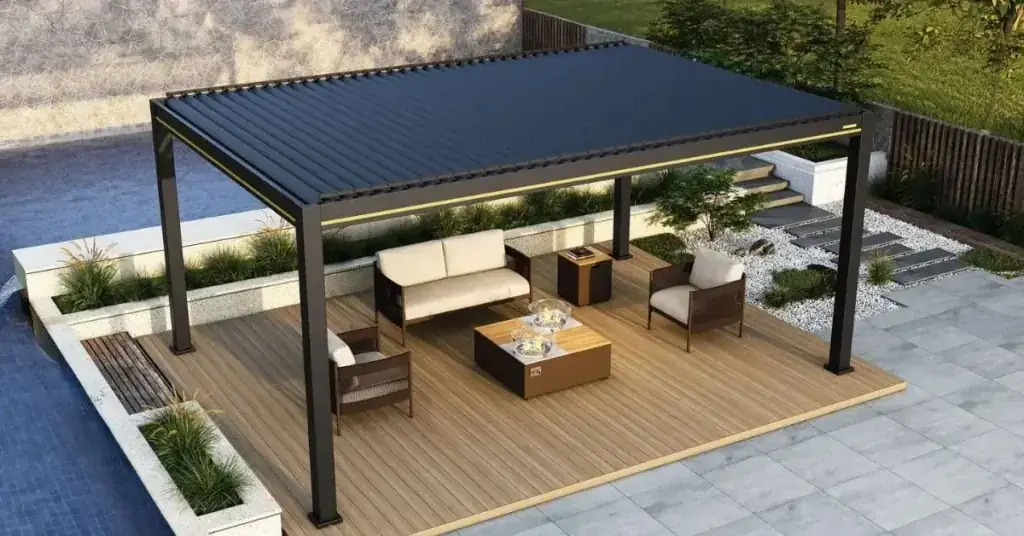
Examining realistic field conditions demonstrates how material selection directly impacts structural safety and performance.
Scenario A: High-Wind Frame Distortion
A homeowner installs a low-cost, thin-gauge aluminum canopy frame in an open suburban backyard prone to strong afternoon wind gusts. Within two years, repeated wind pressure bends the hollow support posts, twisting frame corners out of alignment. The light metal extrusions deform around anchor bolts, requiring complete frame replacement with heavy structural aluminum.
Scenario B: Timber Beam Sagging Under Snow Loads
A builder installs long spans of low-density treated pine to support a heavy overhead arbor canopy in a region with heavy winter snows. Unreinforced pine beams absorb winter moisture, softening internal wood fibers before a heavy snowstorm hits. The accumulated snow weight snaps the center support beam, damaging underlying patio furniture and proving the risk of using under-rated lumber.
Scenario C: Fastener Corrosion in Coastal Environments
A coastal property owner constructs a cedar shade frame using standard zinc-plated steel screws to save money on hardware. Salt-laden coastal air corrodes the steel screws within eighteen months, causing rust streaks to run down the wood posts. Corrosion weakens the fastener shanks, causing overhead rafters to pull away from main ledger boards during autumn windstorms.
Scenario D: Composite Board Swelling and Delamination
An uncapped wood-plastic composite material is installed over an overhead roof frame in a humid, shaded garden location. Trapped moisture collects in unsealed cut ends, swelling internal wood fibers and causing the surface plastic shell to crack. The swollen composite boards push against structural frame joints, loosening fasteners and requiring costly board replacements.
Cost Dynamics, Lifespan Projections, and Financial Risks
Focusing exclusively on upfront material costs often conceals ongoing expenses associated with maintaining low-grade outdoor structures.
Direct Material and Upfront Labor Expenses
Inexpensive materials offer low initial purchase prices, appealing to budget-conscious homeowners and quick property developments. However, softwoods and light metal kits often require extra support blocking, frequent fastener adjustments, and protective coatings during installation. These added installation steps reduce initial labor savings significantly.
Indirect Maintenance and Repair Expenditures
Maintaining low-grade materials requires buying clear sealants, wood stains, replacement hardware, and specialized cleaners regularly over time. Neglecting routine maintenance accelerates wood decay, metal corrosion, and board twisting, leading to early structural failure. Replacing damaged structural components requires expensive labor that far exceeds initial material savings.
Comparative Cost Estimates Across Material Classes
Evaluating structural investment requirements over a fifteen-year period reveals true long-term value differences across material choices.
| Material System Class | Initial Material Cost (per Sq Ft) | Estimated 15-Year Maintenance Cost | Structural Replacement Risk | Total 15-Year Cost Profile |
| Treated Softwood Lumber | $15 – $25 | $30 – $45 (Stains & Sealers) | High (Probability of Rot) | High Long-Term Expenditure |
| Heavy Structural Aluminum | $55 – $85 | $5 – $10 (Basic Cleaning) | Very Low | Stable Initial Investment |
| Premium Architectural Hardwood | $65 – $100 | $15 – $25 (Cosmetic Oil) | Low | Premium Long-Term Asset |
| Capped Synthetic Polymer | $45 – $70 | $5 – $12 (Surface Washing) | Low to Moderate | Balanced Long-Term Value |
Evaluation Tools, Verification Strategies, and Quality Checks
Applying systematic quality control checks before buying materials prevents installing sub-standard components on-site.
Wood Moisture Content Meters
Using digital pin-type moisture meters measures internal timber dampness before starting outdoor frame construction. Wood moisture levels must read below nineteen percent before applying stains, paints, or structural hardware connections. Installing wet lumber guarantees wood shrinkage, board checking, and loose structural joints as timber dries outdoors.
Ultrasonic Metal Thickness Gauges
Handheld ultrasonic gauges verify metal wall thickness on aluminum extrusions, confirming components meet engineered load specifications. Checking post wall thickness prevents using low-grade, thin-walled metal profiles that bend under severe environmental stress. Verifying metal specifications ensures the frame provides adequate strength across long beam spans.
Fastener Salt-Spray Coating Certifications
Checking hardware packaging for ASTM B117 salt-spray test ratings ensures bolts and screws resist harsh weather corrosion. Quality outdoor fasteners feature multi-layer ceramic or 316-grade stainless steel coatings that resist rust when exposed to treated lumber chemicals. High-grade hardware prevents fastener failure and keeps structural frame joints tight for decades.
Cross-Sectional Composite Cap Inspection
Inspecting cut composite board ends verifies that protective polymer shell layers enclose internal cores completely. Thick polymer shells block moisture penetration, prevent core swelling, and shield synthetic fibers against solar radiation. Avoiding thin-capped composite boards reduces long-term risks of surface peeling, cracking, and water absorption.
Taxonomy of Material Failures and Compounding Risks
Understanding how minor material defects escalate into major structural failures highlights the importance of choosing quality components early.
Structural Failure Escalation Pathways
-
Low-Density Timber Failures: Moisture absorption leads to wood fiber swelling. Subsequent solar drying creates deep checking and twisting, which ultimately causes fastener pull-out and complete beam collapse.
-
Thin-Gauge Aluminum Failures: High wind loads cause wall shear and metal deformation. The resulting strain cracks protective coatings, causing surface oxidation, post buckling, and roof frame distortion.
-
Substandard Fastener Failures: Chemical reactions with treated wood destroy basic zinc coatings. Rust formation reduces the screw shank diameter, leading to shear failure and rafter detachment.
Wood Fiber Checking and Structural Splitting
Deep surface cracks open along wood growth rings when low-density lumber dries unevenly in direct outdoor sunlight. Moisture collects inside open wood checks, creating ideal conditions for fungal spores to grow deep within structural support beams. Internal fungal rot hollows out wood centers, causing sudden beam failure under heavy environmental loads.
Powder Coating Peeling and Substrate Oxidation
Inadequate chemical pre-treatment allows outdoor moisture to penetrate beneath thin powder coatings on metal frames easily. Trapped moisture oxidizes the underlying metal, causing surface coatings to bubble, crack, and peel away in large sheets. Unprotected aluminum forms white powdery corrosion that weakens metal walls and damages joint connections.
Fastener Galvanic Corrosion and Joint Shear
Joining dissimilar metals without protective insulating washers triggers galvanic corrosion in wet outdoor environments. Less noble metals corrode rapidly, eating away bolt shanks and weakening main ledger board connections. Weakened fasteners snap under sudden wind loads, allowing heavy overhead beams to detach from house walls unexpectedly.
Maintenance Protocols and Long-Term Material Adaptation
Establishing systematic maintenance routines protects outdoor structural materials, extends service life, and ensures long-term safety.
Seasonal Hardware Tension Inspections
Checking structural bolts, post anchors, and ledger board connections every autumn catches loose hardware before winter storms arrive. Retightening loose bolts maintains joint stability, prevents structural sway, and stops hardware from enlarging mounting holes over time. Replacing rusted fasteners with stainless steel hardware preserves frame strength across changing seasons.
Surface Sealing and Coating Reapplication
Applying high-quality breathable water repellents onto softwoods every two years slows moisture absorption and reduces board checking. Cleaning aluminum frames with mild soapy water removes corrosive salt deposits, dirt, and pollution film from powder-coated surfaces. Regular surface care protects material appearance and prevents premature coating degradation.
Drainage Channel and Gutter Clearout
Clearing leaves and organic debris from overhead gutter channels prevents standing water from overflowing onto frame support joints. Trapped debris holds moisture against metal seams and wood beams, accelerating seal degradation and promoting rot. Keeping drainage pathways clear reduces structural water exposure and preserves joint integrity.
Measurement Metrics and Structural Quality Audits
Tracking structural indicators helps property owners assess material condition, identify wear early, and plan timely repairs.
Leading Failure Metrics
Leading indicators provide early warning signs of material degradation before structural safety is compromised. Measuring beam deflection variance catches early wood sagging or metal bending across long structural spans. Tracking surface finish chalking rates identifies powder coating breakdown before metal corrosion damages underlying frame components.
Lagging Failure Metrics
Lagging indicators measure accumulated material damage after environmental degradation has already occurred. Tracking total fastener replacement counts highlights active galvanic corrosion or chemical interactions within treated timber joints. Recording timber crack depth growth pinpoints structural wood decay that requires immediate section reinforcement or replacement.
Structural Inspection Audit Protocols
A comprehensive timber frame audit involves verifying key structural safety items systematically:
-
Support Post Moisture Content Audit: Internal timber dampness is measured across main support posts. Readings between 14.2% and 16.8% fall within the safe operational threshold (target: under 19%), confirming acceptable moisture levels.
-
Main Rafter Deflection Audit: Beam sag is evaluated across long structural spans. For example, a 0.38-inch deflection across a 12-foot span (L/384 ratio) remains well within the maximum allowable L/240 design threshold, confirming structural stiffness.
-
Fastener Corrosion Condition Audit: Connections at ledger beams and post anchors are inspected for rust. If visible rust streaking appears on older zinc-plated bolts, all non-compliant fasteners must be replaced with 316-grade stainless steel hardware to prevent joint shear.
Common Industry Misconceptions and Material Myths How to Avoid Cheap Pergola Material Risks
Correcting common material myths enables buyers to choose structural components based on engineering facts rather than marketing claims.
Myth 1: All Pressure-Treated Wood Resists Warping and Splitting Equally
Correction: Pressure chemical treatments protect wood against fungal rot and insects, but they do not alter natural timber density or grain structure. Fast-grown treated pine contains wide growth rings that warp, twist, and split as moisture evaporates in outdoor sun. Dense hardwoods or engineered Glulam timber resist movement far better than low-density treated softwoods.
Myth 2: Aluminum Structures Never Require Maintenance or Surface Care
Correction: Aluminum frames resist rust, but outdoor dirt, airborne salts, and pollution degrade powder coatings if left unwashed. Salt buildup on coastal installations causes pitting corrosion if surface deposits are not rinsed away with fresh water regularly. Washing aluminum frames twice a year preserves powder coatings and maintains metal appearance.
Myth 3: Composite Materials Are Completely Indestructible and Maintenance-Free
Correction: Synthetic composites resist water absorption better than natural wood, but uncapped composite boards absorb surface moisture over time. Unprotected composite fibers expand in hot weather, fade in direct sunlight, and support surface mold growth in shaded areas. Capped composite materials require periodic cleaning to maintain appearance and performance.
Myth 4: Any Outdoor Screw Works Safely in Pressure-Treated Lumber
Correction: Modern pressure-treated lumber contains high concentrations of copper, which corrodes standard steel and zinc-plated screws rapidly. Using unrated fasteners causes rapid bolt corrosion, leading to joint failure and frame collapse. Installing hot-dip galvanized or 316-grade stainless steel fasteners prevents chemical corrosion in treated wood.
Ethical Sourcing and Site-Specific Environmental Factors
Selecting outdoor materials requires evaluating environmental impacts, local weather conditions, and sustainable manufacturing practices carefully.
Sustainable Forest Management and Certification
Sourcing timber certified by organizations like the Forest Stewardship Council ensures wood comes from responsibly managed forests. Sustainable forestry practices protect biodiversity, prevent deforestation, and maintain natural watershed stability across timber-producing regions. Choosing certified hardwoods or local softwoods reduces environmental impacts while delivering quality building materials.
Recyclability and Material Environmental Life-Cycle
Evaluating material life cycles helps buyers choose components that minimize environmental waste over long operational lifespans. Heavy aluminum profiles contain high recycled content and remain fully recyclable at the end of their structural service life. Using long-lasting materials reduces landfill waste and minimizes resource consumption associated with frequent replacements.
Site Microclimates and Exposure Conditions
Analyzing local microclimates ensures selected materials handle specific environmental stressors like high humidity, salt spray, or intense sun exposure. Shaded damp yard zones require materials that resist fungal decay, while open sunny sites demand strong ultraviolet stabilization. Matching materials to specific site conditions prevents premature degradation and extends structural service life.
Strategic Conclusion
Building a safe outdoor shelter requires selecting high-quality structural materials capable of withstanding constant environmental exposure over long operational lifespans. Understanding how to avoid cheap pergola material risks helps property owners identify weak components, avoid misleading specifications, and prevent costly structural failures. Investing in dense hardwoods, heavy structural aluminum, or capped composite materials creates durable structures that handle severe weather safely.
Achieving long-term structural reliability depends on balancing initial material investments against ongoing maintenance demands and lifespan projections. Prioritizing engineered hardware, protective surface finishes, and proper installation techniques prevents premature decay, corrosion, and structural sagging. Thorough material evaluation, quality installation standards, and routine maintenance ensure outdoor living spaces remain safe, functional, and visually appealing assets for decades to come.